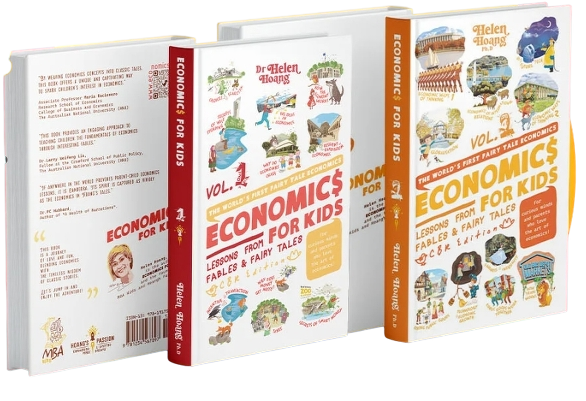
Making Economics Easy Through Storytelling
When it comes to learning and understanding economics, Dr. Helen Hoang’s “Economics for Kids: Lessons from Fables & Fairy Tales,” offers a refreshing take on financial literacy, which makes complex economic concepts like scarcity and savings accessible to children through beloved fables and fairy tales.
From the story of The Ant and the Grasshopper, children learn how planning for the future and managing resources are key to long-term success. Furthermore, the practical application of opportunity cost is introduced in The Fox and the Crow, showing kids that not all rewards are worth the cost.

Learning Economics with a Canberra Twist
But, what makes this book truly special is its blend of economics with the modern-day city of Canberra, incorporating well-known landmarks like the National Museum of Australia and the Australian War Memorial. These locations serve as the backdrop for the fables, making the economic lessons even more tangible and relatable for kids.
With a focus on both microeconomics and macroeconomics, Economics for Kids covers a broad range of topics, from how governments control money to the importance of supply and demand. Each chapter ends with thoughtful discussion questions, making it perfect for parents and teachers who want to engage children in deeper conversations about finances.
Why This Book Is More Than Just a Learning Tool
This book is more than just an educational tool. As a book that tells stories about practical and real-life concepts, this literature invites young readers to consider economics as an important part of their daily lives. By combining engaging storytelling with practical economic concepts, Dr. Hoang has created a resource that will empower children as well as their to become informed and responsible consumers and citizens.
What does this book offer?
Dr. Hoang’s use of fables and fairy tales makes economics more relatable and interesting for children. By connecting economic concepts to familiar stories, she helps children understand these complex ideas in a meaningful way.
Setting the book in Canberra, a city with a rich history and diverse cultural experiences, provides children with concrete examples of how economic principles apply in the real world. This helps them see economics as a relevant and important subject.
The inclusion of discussion questions at the end of each chapter encourages children to think critically about the economic concepts they have learned. This helps them develop their problem-solving skills and apply their knowledge to real-world situations.
The relevance of economics to everyday life by Dr. Hoang shows children how economics is not just a subject they learn in school but a vital part of their everyday lives. By understanding economic principles, children can make informed decisions about their finances and contribute to a better society.
In conclusion, “Economics for Kids: Lessons from Fables & Fairy Tales” is a valuable resource for parents and teachers who want to introduce children to the world of economics in a fun and engaging way. By combining storytelling, real-world examples, and critical thinking, Dr. Hoang has created a book that will empower children to become informed and responsible citizens.