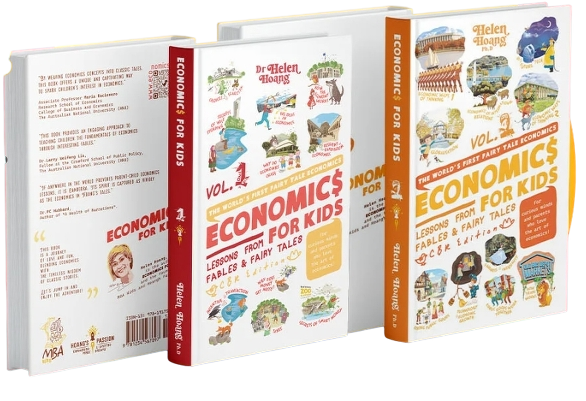
Why Teaching Economics to Kids Matters More Than Ever
In today’s uncertain world, teaching kids about money management, saving, and basic economic principles has never been more important. As global economies face growing challenges, equipping the next generation with strong financial literacy skills can set them up for lifelong success.
However, for many children, concepts like budgeting, opportunity cost, and scarcity can feel confusing and difficult to grasp.
That’s where Dr. Helen Hoang’s book, Economics for Kids: Lessons from Fables & Fairy Tales, makes a difference—by turning these complex topics into fun, easy-to-understand lessons using classic stories.
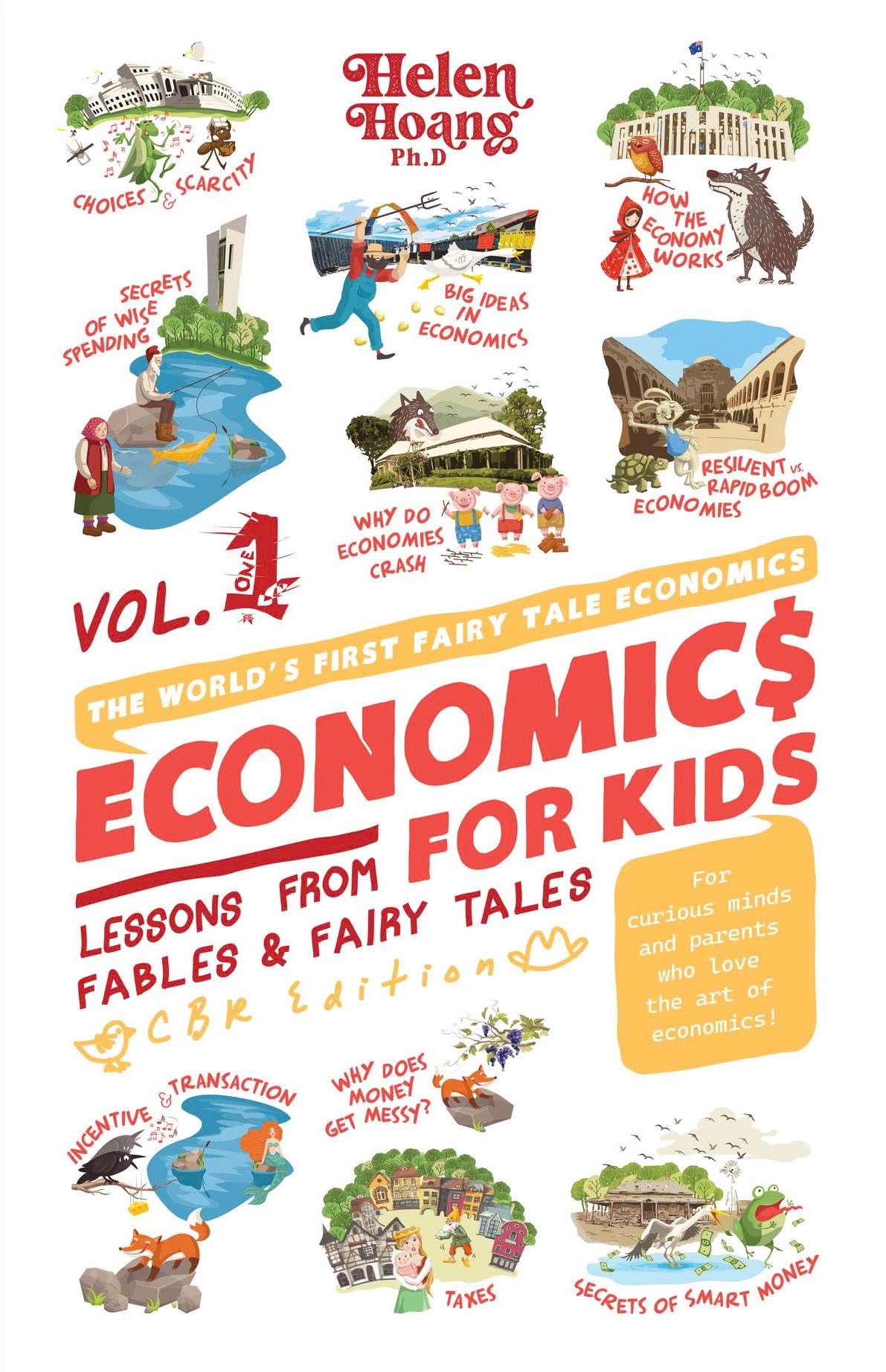
Turning Fairy Tales Into Financial Lessons
In this beautifully illustrated book, Dr. Helen Hoang cleverly transforms well-known fables like The Ant and the Grasshopper, The Fox and the Crow, and Rumpelstiltskin into engaging stories that introduce economic concepts for kids in an age-appropriate way.
Set against the scenic backdrop of Canberra, Australia, this book adds cultural richness while teaching important ideas like:
-
Saving and planning for the future
-
Understanding scarcity and decision-making
-
Recognizing the consequences of short-term thinking
For example, in The Ant and the Grasshopper, children learn how the hardworking ant survives the winter by preparing ahead—teaching them that resources like money and time are limited, and that saving is key to long-term stability.
Encouraging Critical Thinking Through Storytelling
What sets Economics for Kids apart is its interactive format. At the end of each story, readers are encouraged to reflect with discussion questions like:
-
“Why do you think the ant worked while the grasshopper played?”
-
“How can planning help you when things become scarce?”
These questions prompt kids to apply what they’ve learned to real-life situations, encouraging thoughtful conversations between parents, teachers, and young readers.
Even abstract ideas like taxation are brought to life. In Rumpelstiltskin, the narrative shows how high demands (like taxes) can create pressure, while fair and wise use of resources can benefit everyone. It’s a powerful way to introduce children to public goods, decision-making, and policy fairness—all within the context of a fairy tale.
A Must-Have Resource for Teaching Financial Literacy
With vibrant illustrations by Long Hoang Kim and expertly crafted storytelling, this book offers more than just bedtime reading—it delivers valuable life skills.
Whether you’re a parent, homeschooler, or teacher looking for a tool to make economics fun for kids, Economics for Kids: Lessons from Fables & Fairy Tales is a must-have in your library. It inspires curiosity, builds critical thinking, and lays a strong foundation for future financial responsibility.
Help your child become a thoughtful saver, smart spender, and responsible future leader—one story at a time.
Ready to inspire the next generation of economic thinkers?
Get your copy of Economics for Kids on Amazon: https://www.amazon.com/dp/1917553714