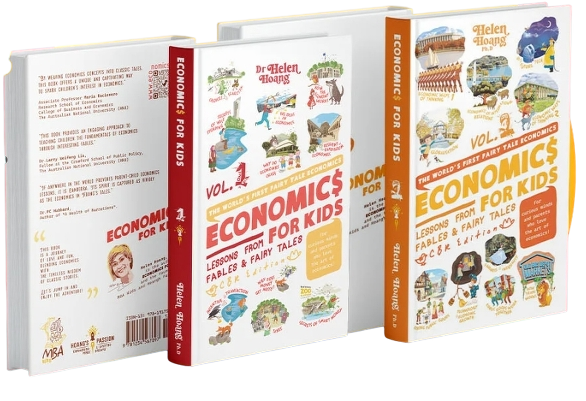
Fairy tales and fantasy stories have always been powerful tools for teaching children important life lessons. They not only entertain but also make complex ideas easier to understand. When applied to the world of economics, these stories become even more valuable—especially for explaining concepts like scarcity, opportunity cost, saving, and decision-making.
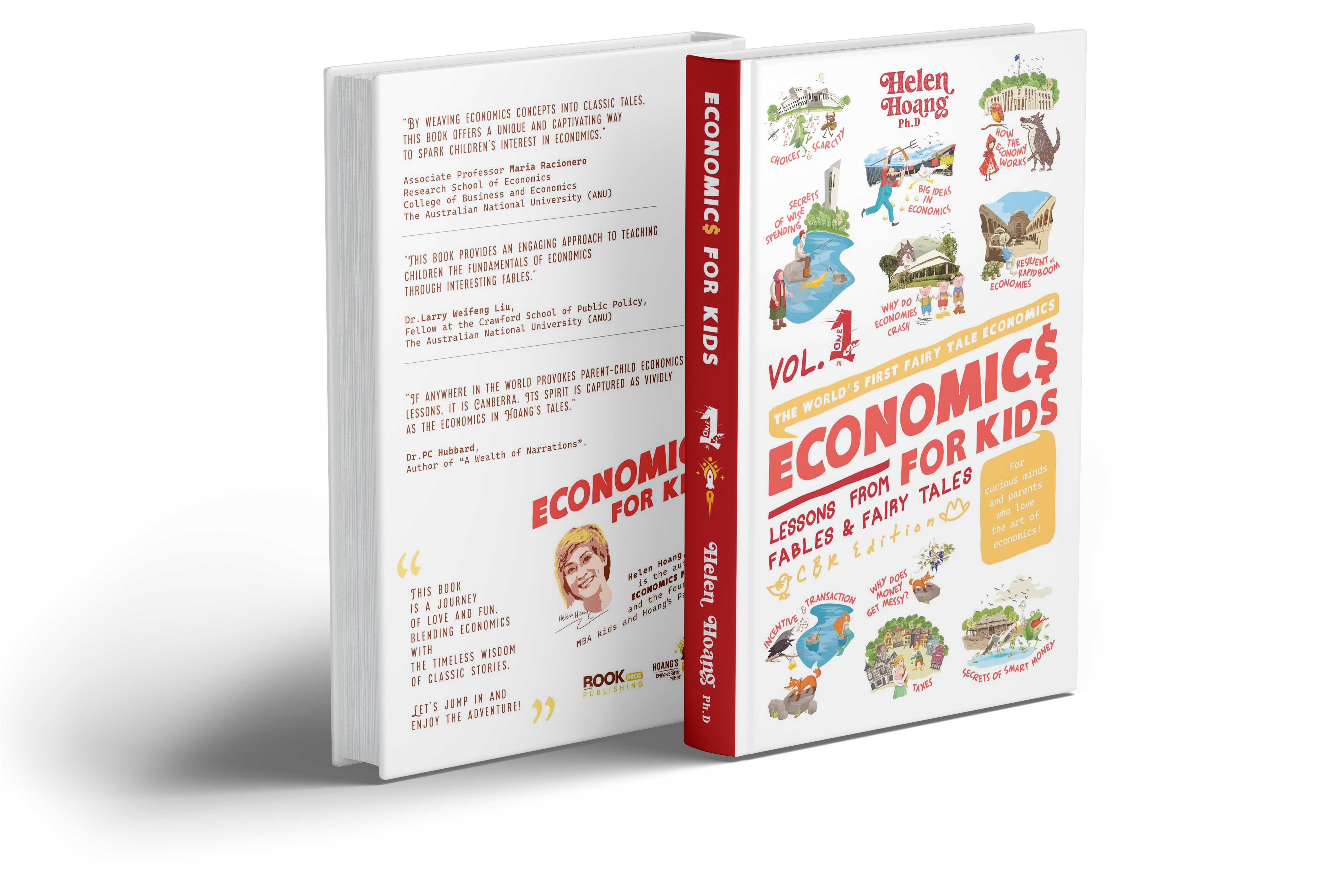
Dr. Helen Hoang’s book, “Economics for Kids: Lessons from Fables & Fairy Tales”, uses classic stories like “The Ant and the Grasshopper” and “Rumpelstiltskin” to introduce economic principles in a way that is both relatable and memorable for children. By connecting beloved characters with real-world financial concepts, this book helps young readers build a strong foundation in financial literacy from an early age.
Lessons on Scarcity and Opportunity Cost in Fairy Tales
One of the most well-known fables in “Economics for Kids: Lessons from Fables & Fairy Tales” is “The Ant and the Grasshopper.”
This tale teaches children that resources like time, money, and food are limited—and that saving and planning ahead are essential for future security. It’s a simple but effective way to explain how smart choices today can lead to better outcomes tomorrow.
Another classic example in the book is “Rumpelstiltskin,” which demonstrates opportunity cost—the idea that every decision has a cost. The miller’s daughter agrees to trade increasingly valuable items for magical help, ultimately promising her firstborn child. This story helps children grasp the concept of trade-offs and the importance of evaluating what they give up when making choices.
Decision-Making and Trade-Offs for Young Minds
“Rumpelstiltskin” also highlights how decisions have consequences. Each time the miller’s daughter accepts Rumpelstiltskin’s help, the trade-off becomes more significant. Children learn that it’s not just about what they gain—but also about what they might lose.
These economic lessons are made tangible through engaging storytelling. Kids begin to understand that every choice involves a trade-off, and that critical thinking is a valuable skill when faced with difficult decisions.
Making Financial Literacy Fun and Engaging
What sets Economics for Kids: Lessons from Fables & Fairy Tales apart is how it brings economics to life through stories children already know and love. The book turns abstract terms into relatable moments, making financial literacy for kids fun, engaging, and easy to grasp.
By using fairy tales to explain essential economic concepts, Dr. Helen Hoang gives parents and educators a powerful tool to teach saving, planning, and decision-making. Through stories like “The Ant and the Grasshopper” and “Rumpelstiltskin,” children not only enjoy reading—they also gain skills that will serve them for life.