It’s a sunny school holiday—an ideal time for curious Econ Kid and his wise Econ Mom to explore Canberra’s Old Parliament House.
Inside the grand building, Econ Kid notices a trail of ants carrying food, completely focused on their task.
The sight reminds him of the fable, The Ant and the Grasshopper, a story filled with important economic lessons.
The Ant and the Grasshopper: A Tale of Scarcity and Smart Choices
Econ Mom sees a teaching moment and begins connecting the tale to core economic ideas.
She describes a land where grasshoppers play all day, while ants work hard gathering food for winter.
This contrast introduces scarcity—resources like food and money are limited and must be managed wisely.
The ant saves food to prepare for winter, showing planning and understanding that resources won’t always be available.
The grasshopper enjoys the present but ignores the future, introducing the idea of opportunity cost.
Choosing one thing means giving up another, like playtime over saving food for winter survival.
The Importance of Saving and Smart Planning
As the story goes on, winter arrives, and the ant thrives thanks to her earlier efforts.
The grasshopper suffers due to poor planning and no food, revealing why saving is essential in economics.
Econ Mom adds that saving gives security during difficult times and helps people reach long-term goals.
She introduces utility—the satisfaction people get from using a good or service—and how it influences decision-making.
For example, the grasshopper values fun now, while the ant values future safety and comfort.
Each choice reflects personal preferences, which shape how we spend time, effort, or money.
From Fable to Real Life: Reflecting on Everyday Economic Decisions
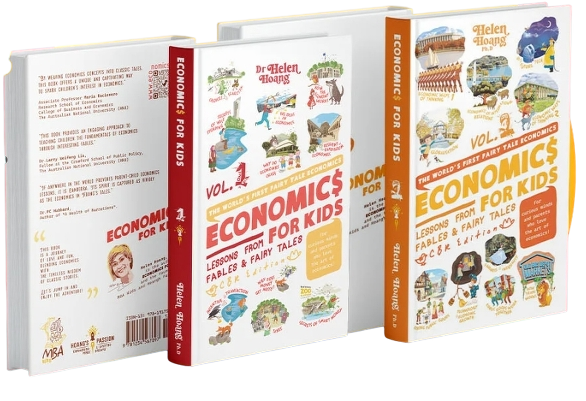
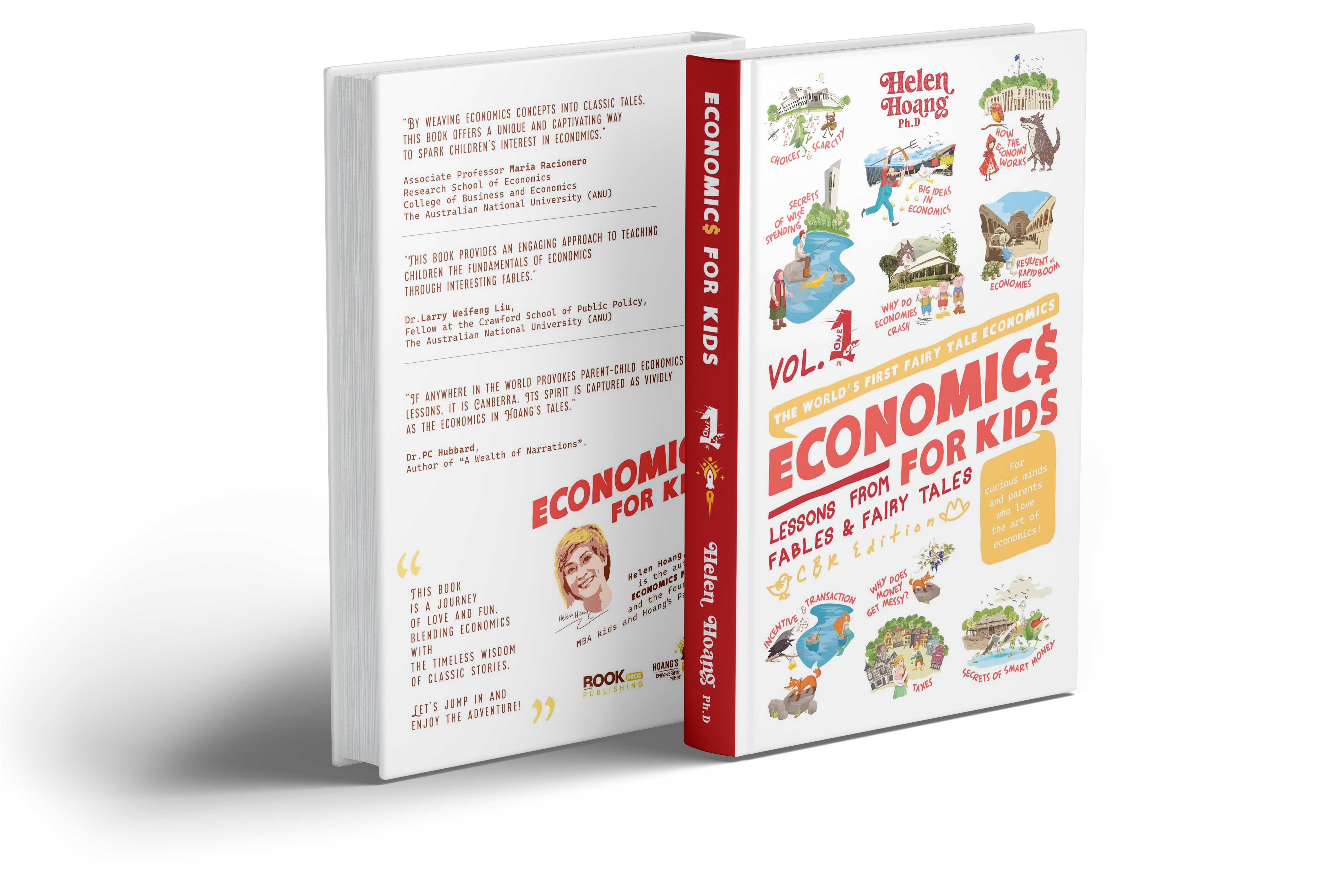
The book teaches opportunity cost, incentives, patience, and planning in a way that’s fun and easy to understand.
It features Canberra landmarks like the National Museum and War Memorial, helping kids connect stories to real places.
This setting adds cultural depth and relevance, showing how economics applies to everyday life and familiar surroundings.
Interactive Learning That Builds Financial Confidence
Economics for Kids also includes discussion questions after each chapter to promote critical thinking.
These questions help children relate each story to their own decisions, experiences, and values.
The format encourages active learning, not just reading—helping kids build financial confidence from a young age.
Dr. Hoang’s book turns economic theory into everyday knowledge kids can use at school, home, or in the future.
Get your copy of Economics for Kids: Lessons from Fables & Fairy Tales today: Buy on Amazon